Tracking Your Cycle: From Apps to Symptoms — The Methods Compared
Cycle tracking spans from a dot on a calendar to temperature-sensing wearables — and the right method depends on what you’re actually asking: when’s my period, why do I feel like this, or something bigger. The methods compared, the privacy fine print and the pattern-reading skill.

The Method Taxonomy
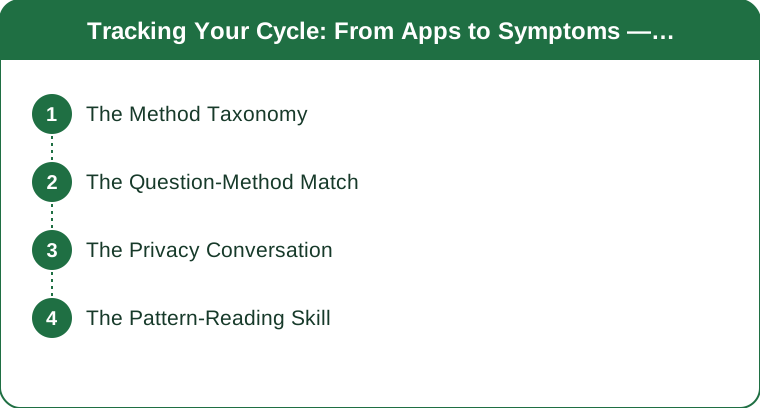
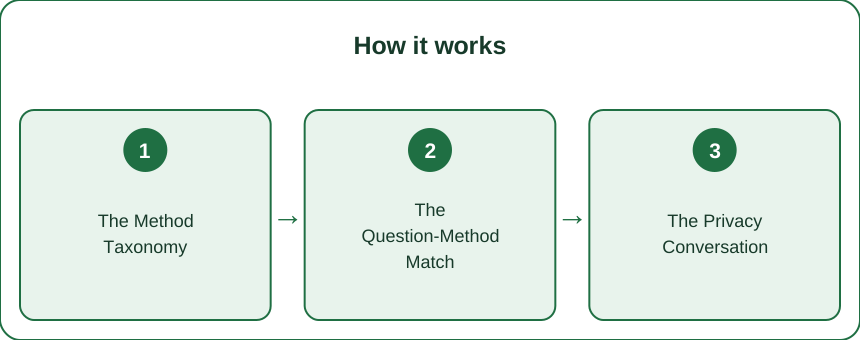
The options by effort: the calendar-minimum (period start-and-end dates only — the two-second habit that already predicts your next three cycles and flags irregularity; the medical-appointment answer to ‘when was your last period’ finally ready), the symptom-logging tier (energy, mood, sleep, cravings, training quality tagged daily — the cycle-syncing raw material; the two-minute evening habit that builds the personal pattern library), the biomarker tier (basal body temperature, cervical mucus observation — the fertility-awareness toolkit with real learning curves and real information), and the wearable tier (temperature-sensing rings and watches automating the biomarker layer — convenience at subscription prices; the data quality is genuinely good, the necessity depends on your question).
The Question-Method Match
Choosing by purpose: ‘when’s my period’ needs only the calendar tier (the app’s prediction improves with every logged cycle — three cycles in, it’s usually within a day or two for regular cycles), ‘why do I feel like this’ needs the symptom tier (the cycle-syncing project runs on two-three months of logs — the patterns that explain the week-three energy dip live here), ‘am I ovulating / fertility questions’ need the biomarker tier taken seriously (temperature-and-mucus methods used for conception timing are well-established; used for CONTRACEPTION they demand proper protocol learning — the taught method, not the app-guess; the stakes decide the rigor), and ‘is something wrong’ needs the calendar tier plus a doctor (cycles consistently shorter than 21 or longer than 35 days, or the missing-months pattern, are data worth bringing in — the log turns ‘irregular-ish’ into an answerable chart).

The Privacy Conversation
The fine print that matters: cycle data is sensitive data (the app’s privacy policy is worth two minutes — where’s the data stored, is it sold, can you delete it; the post-2022 conversation made this mainstream and the apps responded unevenly), the local-storage and privacy-forward options exist (the apps that keep data on-device, the paper-and-spreadsheet tier that never left — tracking doesn’t require a cloud), and the sharing-settings audit (the default-on integrations and the anonymized-research toggles — opt-in should be a choice you actually made). Track generously; share deliberately.
The Pattern-Reading Skill
Making logs useful: the monthly review ritual (ten minutes at cycle’s end scanning the tags — the patterns invisible day-to-day are obvious in the month view; the energy-audit method applied to hormones), the two-cycle rule before conclusions (one month is an anecdote — the cycle-syncing world’s track-first doctrine; patterns that repeat twice are yours), the action translation (the luteal-week training adjustment, the pre-period sleep protection, the iron-attention week — each confirmed pattern earns one calendar accommodation), and the flag-list for the doctor visit (heavy-and-flooding, pain beyond管理, the missing cycles — the log is the appointment’s best evidence). The cycle was always sending data — tracking just installs the receiver.
Match method to question, two cycles before conclusions, read the privacy policy, bring the log to appointments. Cycle tracking is personal data science — calibrated to what you’re actually asking.
Keep Reading
This article is for general informational purposes only and is not medical advice. Always consult a qualified health professional for guidance specific to you.