Why the Week Before Your Period Changes Your Grip Strength
Quick Answer: In the late luteal phase — the week before your period — many people find the bar slips before their back or legs give out. Connective tissue laxity, mild fluid retention in the hands, and higher perceived effort all combine at the grip, which is usually the weakest link in a pulling chain. Straps, a mixed grip, or splitting a heavy set into smaller pieces will usually restore the working weight.
Your deadlift felt fine two weeks ago at this weight.
Today the bar is rolling out of your fingers on rep four, while your legs and back feel like they have plenty left.
That is a very specific pattern, and it has a very specific explanation.
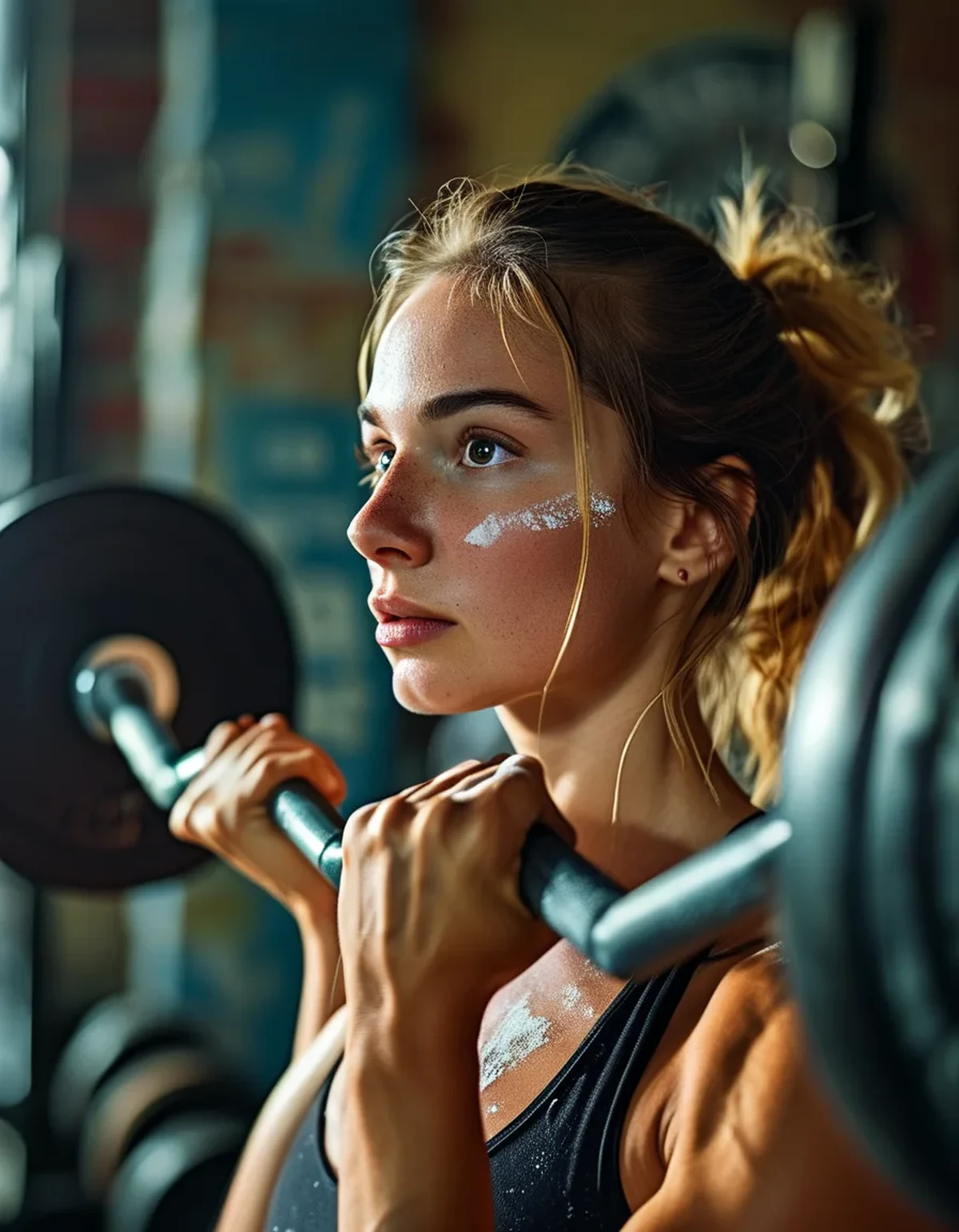
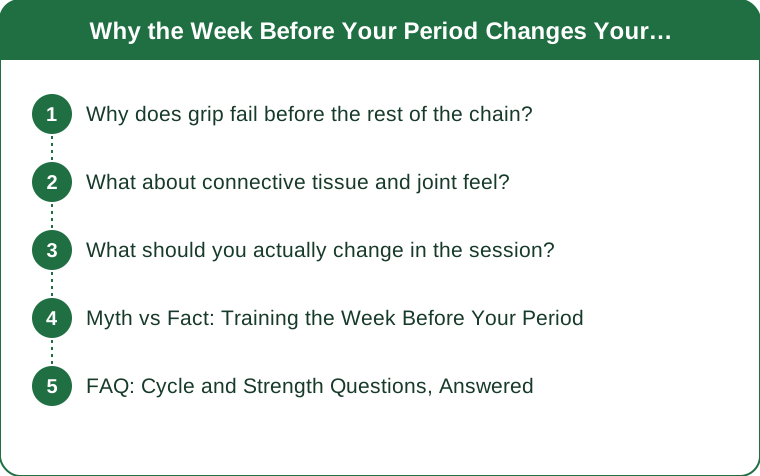
Why does grip fail before the rest of the chain?
Grip is the shortest link, so it is where any small systemic change shows up first.
Three things stack in the late luteal phase.
Fluid retention affects the hands disproportionately. The rise in progesterone and the accompanying shifts in sodium and water handling produce mild fluid retention in most people, and the hands and fingers are among the most noticeable sites. Slightly swollen fingers have a marginally reduced range of comfortable flexion and a slightly less secure wrap around a bar. It does not take much.
Perceived effort is higher across the board. Late luteal is consistently associated with higher ratings of perceived exertion at the same absolute workload. Grip is a sustained isometric effort that you consciously monitor, unlike the largely automatic recruitment of your posterior chain — so it is the place where the higher perceived effort registers most vividly.
Core temperature is elevated. Basal body temperature rises by roughly 0.3 to 0.5°C after ovulation and stays up through the luteal phase. Slightly warmer means slightly sweatier palms, and palm moisture is the single largest determinant of bar friction there is.
Notice what is not on that list: any meaningful loss of muscular strength. Research on strength across the menstrual cycle is genuinely mixed and the effect sizes, where present, are small. What changes far more reliably is where the limitation shows up and how hard the same work feels.
That distinction matters, because it changes the fix from “train lighter” to “fix the grip.”
What about connective tissue and joint feel?
This is the second half of the picture and it is worth understanding separately.
Oestrogen and relaxin both influence connective tissue compliance, and their levels change substantially across the cycle. The most-discussed consequence is around ovulation, where increased ligament laxity has been associated with elevated ACL injury risk in some studies of jumping and cutting sports.
For lifting specifically, what people usually report is a change in joint feel rather than a change in stability — wrists that feel less locked in a front rack, elbows that feel less solid at the bottom of a bench press, a general sense that things are a little looser than usual.
Practical responses, none of which require abandoning the session:
- Wrist wraps for pressing in weeks where the wrists feel unstable. This is a cheap fix for a real sensation.
- Warm up longer. More warm-up sets at lighter loads, not fewer. The joint feel improves substantially with a proper build-up.
- Prefer machine or fixed-path work for one or two sessions if free-weight stability is the specific complaint. This is not backing off; it is redistributing.
- Keep loading heavy. There is no good evidence that heavy lifting in the luteal phase is unsafe, and deliberately deloading every cycle costs a lot of training over a year.
The honest state of the evidence here is that individual variation is large and the group-level effects are small. Your own log over three cycles will tell you far more about your own pattern than any study will.
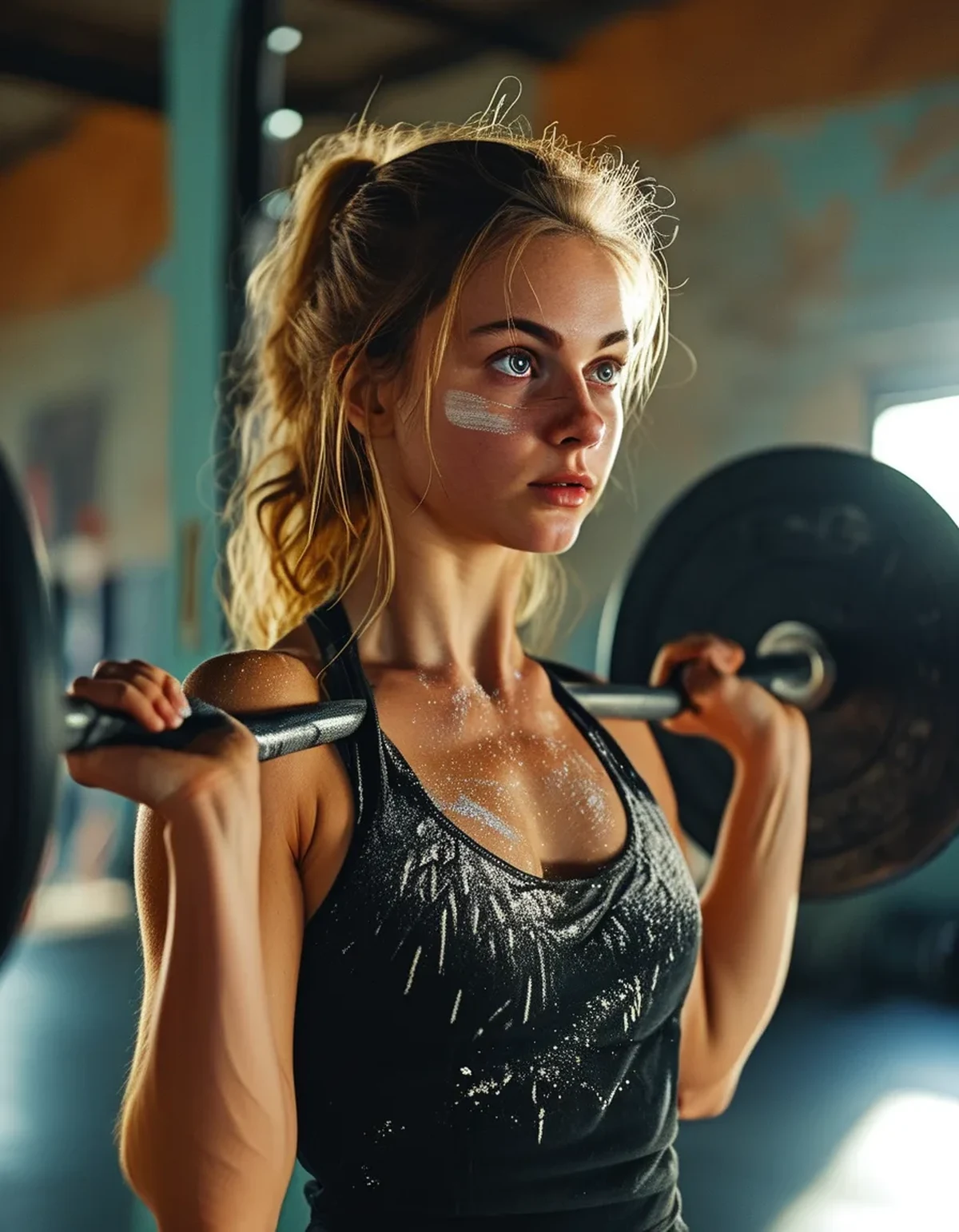
What should you actually change in the session?
Fix the specific failure point rather than lowering the whole session.
Use straps on pulling work. This is the single highest-value change and people resist it for no good reason. If your grip is the limiter and your back is not, straps let you train the muscles you came to train. Keep one strapless set at the end if you want to keep grip strength progressing.
Chalk, properly applied. Most people use too little and apply it to already-damp hands. Dry the hands first, then chalk. In a warmer luteal phase this matters more than usual.
Switch to a mixed or hook grip on top sets. Both are substantially more secure than a double-overhand grip and neither requires equipment.
Split the set. Three sets of three at your working weight instead of one set of eight puts far less sustained demand on the grip while keeping total volume and load intact.
Reorder the session. Do the grip-limited work first, while your hands are freshest, rather than after forty minutes of accessory work.
Adjust rest, not weight. An extra thirty to sixty seconds between heavy sets addresses the higher perceived effort directly, and costs you nothing except time.
What not to do: do not drop the working weight by default. Doing that every cycle means roughly a quarter of your training year is spent at a load you have already outgrown, for a reason that turns out to be fixable with a strap.
Myth vs Fact: Training the Week Before Your Period
Myth: You are physically weaker in the luteal phase. Fact: Maximal strength is remarkably stable across the cycle in most studies, and where differences appear they are small and inconsistent. What changes reliably is perceived effort and where the limitation shows up.
Myth: You should train light the whole week before your period. Fact: A blanket deload every cycle is a large amount of lost training. Most people do better keeping the load and adjusting rest, grip, and exercise selection.
Myth: The bloating means you should not lift heavy. Fact: Mild fluid retention affects the fit of your clothes and how your hands feel on a bar. It is not a contraindication to loading.
Myth: Cycle syncing means a fixed programme for each phase. Fact: Cycle lengths and symptom patterns vary enormously between people and between cycles for the same person. A rigid four-phase template applied from a chart is far less useful than tracking your own sessions for a few months and adjusting from your own data.
Myth: If it feels harder, you should be doing less. Fact: Perceived effort and actual training stress are different things. A session that feels harder at the same load is not a harder session — and treating it as one is how a small hormonal fluctuation turns into a real reduction in yearly volume.
This is general information, not medical advice. If your symptoms are severe enough to consistently interfere with daily life, that is worth discussing with a healthcare professional.
FAQ: Cycle and Strength Questions, Answered
How do I know if this is actually cycle-related or just a bad week?
Log it. Note the session date, the working weight, what failed first, and where you are in your cycle. After three cycles the pattern is either obvious or it is not, and either answer is useful. Without a log this is unanswerable, because bad weeks happen for a dozen reasons.
Does this happen on hormonal birth control?
It varies with the type. Combined hormonal contraceptives flatten the natural hormonal fluctuation considerably, and many people on them report much less cycle-related variation in how training feels. Progestin-only methods produce more mixed reports. Again, your own log is the reliable source here.
Should I schedule my heaviest sessions in the follicular phase?
If your log shows a consistent pattern, aligning your heaviest work with the weeks that reliably feel best is a reasonable optimisation. Just be careful about building a rigid template first and collecting the data second — most people who try this find their actual pattern is less tidy than the charts suggest.
TL;DR:
- Grip fails first because it is the shortest link, not because you got weaker
- Mild fluid retention in the hands, higher perceived effort, and a warmer core all land at the grip
- Fix the grip — straps, chalk, mixed grip, split sets — rather than dropping the working weight
- Joint feel changes are real; longer warm-ups and wrist wraps handle most of it
- Track your own sessions for three cycles before adopting any fixed phase-based template
The most expensive response to this is the automatic one: assume you are weaker, lower the bar, and repeat that thirteen times a year. The bar was fine. Your hands were slightly damp and your fingers were slightly swollen.
Keep Reading
This article is for general informational purposes only and is not medical advice. Always consult a qualified health professional for guidance specific to you.