Beyond the App: 4 Period Tracking Methods and Which Is Actually Most Accurate
Quick Answer: Basic calendar apps are the least accurate for irregular cycles since they just average past cycle length, while symptom- and temperature-based tracking (basal body temperature plus cervical mucus changes) more directly reflects what’s actually happening hormonally cycle to cycle — most accurate results come from combining both.
The pink period-tracking app icon on your phone is doing math, not biology — it’s predicting based on your past averages, which works fine until your body doesn’t cooperate with the average.

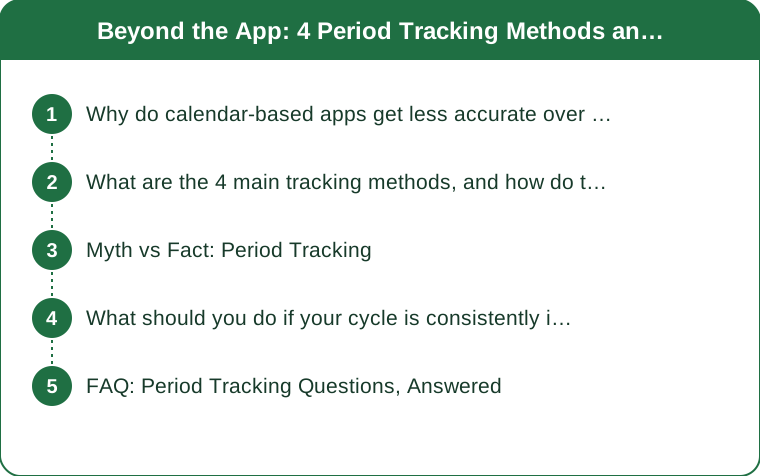
Why do calendar-based apps get less accurate over time for some people?
Because they primarily use average cycle length from your logged history to predict the next period — a method that works reasonably well for consistently regular cycles but breaks down for anyone with irregular cycles, recent hormonal birth control changes, perimenopause, or high stress periods that shift ovulation timing.
What are the 4 main tracking methods, and how do they compare?
1. Calendar/app-based — easiest, least accurate for irregular cycles, since it’s purely historical averaging.
2. Basal body temperature (BBT) — tracking your temperature each morning before getting up; a sustained rise confirms ovulation has already happened, making it more of a confirmation tool than a prediction tool.
3. Cervical mucus tracking — changes in texture and amount correlate with approaching ovulation in real time, giving a more predictive signal than temperature alone.
4. Combined symptom tracking (temperature + mucus + optional ovulation predictor kits) — generally considered the most accurate non-clinical method, since it triangulates multiple real-time signals instead of relying on past averages.

Myth vs Fact: Period Tracking
Myth: Tracking apps use your body’s real-time signals. Fact: Most free apps use calendar math unless you’re actively logging temperature or symptoms yourself — the app is a container, not a sensor.
Myth: Basal body temperature tracking tells you ovulation is about to happen. Fact: BBT rises after ovulation has already occurred — it confirms it happened, but doesn’t predict it in advance the way cervical mucus changes can.
Myth: One irregular cycle means your tracking method is broken. Fact: Occasional cycle variation is normal for most people — the method isn’t ‘wrong,’ it’s reflecting real biological variability.
What should you do if your cycle is consistently irregular?
Combined symptom tracking becomes especially valuable here, since it doesn’t rely on averages that irregular cycles break. If irregularity is new, significant, or accompanied by other symptoms, that’s worth a conversation with a doctor — tracking methods can describe a pattern, but they can’t diagnose why it’s happening.
FAQ: Period Tracking Questions, Answered
Are ovulation predictor kits more accurate than apps?
They detect a real hormone surge (LH) in real time, making them generally more accurate for pinpointing ovulation than calendar-based prediction alone.
How long should I track before trusting my own pattern over an app’s prediction?
Most methods become meaningfully more personalized after 3-4 full cycles of consistent logging.
Does hormonal birth control affect which tracking method works?
Yes — hormonal birth control suppresses natural ovulation, so BBT and cervical mucus tracking aren’t meaningful ovulation indicators while on it; calendar tracking of withdrawal bleeding is the relevant method instead.
TL;DR:
- Calendar apps average past history — less reliable the more irregular your cycle is
- BBT confirms ovulation after it happens; cervical mucus tracking predicts it in real time
- Combined symptom tracking is generally the most accurate non-clinical method
- New or significant irregularity is worth a doctor’s conversation, not just a different app
This is general information, not medical advice — persistent irregularity deserves a professional look, not just a tracking method switch.
Keep Reading
This article is for general informational purposes only and is not medical advice. Always consult a qualified health professional for guidance specific to you.