Cycle Syncing While on Hormonal Birth Control: What Actually Applies and What Doesn't
Most cycle syncing content assumes a natural, unmedicated menstrual cycle with its own distinct hormonal phases, and a significant number of readers are actually on some form of hormonal birth control that changes that underlying hormonal pattern substantially — meaning a lot of standard cycle syncing advice doesn’t actually transfer as directly as presented. Here is what changes with hormonal birth control involved, and a more accurate approach for this specific situation. This is general information, not medical advice.

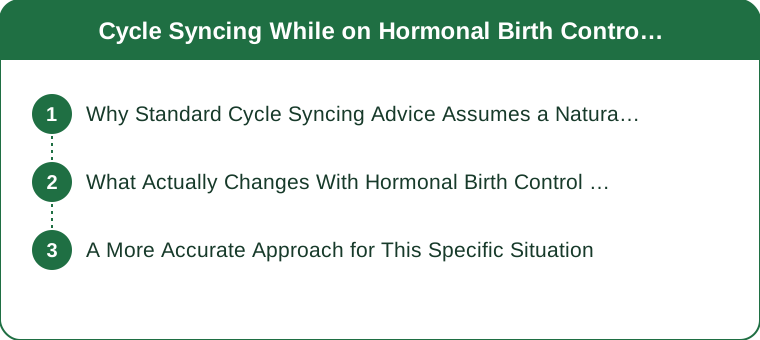
Why Standard Cycle Syncing Advice Assumes a Natural Cycle
The mismatch: the the-standard-advice-is-built-around-natural-fluctuations-in-estrogen-and-progesterone-across-four-distinct-phases (the entire cycle syncing framework, per the cycle-syncing-honest-guide logic, being built around the natural rise and fall of estrogen and progesterone across the follicular, ovulatory, luteal and menstrual phases specifically — the the-whole-framework-assumes-those-specific-natural-hormonal-swings-are-actually-happening), the the-most-hormonal-birth-control-methods-suppress-or-flatten-those-natural-fluctuations-by-design (the combined hormonal contraceptives specifically working by suppressing ovulation and providing a steadier, flatter hormone level across the cycle, which is the intended mechanism, not a side effect — the flattening-the-natural-hormonal-swings-is-literally-how-many-of-these-methods-are-designed-to-work), the the-a-flatter-hormonal-profile-means-the-phase-specific-natural-fluctuations-cycle-syncing-relies-on-arent-really-occurring-in-the-same-way (the actual physiological basis cycle syncing depends on being substantially altered or absent for many hormonal birth control users, meaning the standard advice’s underlying premise doesn’t fully apply — the the-premise-cycle-syncing-relies-on-doesnt-fully-hold-for-many-birth-control-users), the the-different-birth-control-methods-vary-considerably-in-how-much-they-flatten-natural-fluctuation (the different types and formulations, from combined pills to hormonal IUDs to progestin-only methods, varying meaningfully in how much they suppress natural cyclical hormone patterns, meaning there’s no single uniform answer across all birth control types — the different-methods-flatten-natural-fluctuation-to-different-degrees-not-uniformly), and the reframe (the mismatch as a real premise gap, not a reason to dismiss the concept of syncing activity to how you feel — just a signal that the standard four-phase framework needs real adjustment for this situation).

What Actually Changes With Hormonal Birth Control Involved
The practical implications: the the-withdrawal-bleed-on-combined-methods-isnt-the-same-physiological-event-as-a-natural-period (the scheduled bleed on many combined hormonal methods being a response to the pill-free or placebo interval rather than the same hormonal event as a natural menstrual period, meaning symptom patterns around it may differ from natural-cycle expectations — the the-withdrawal-bleed-and-a-natural-period-are-physiologically-different-events-even-though-they-look-similar), the the-any-remaining-symptom-patterns-may-still-be-worth-tracking-even-without-the-same-underlying-hormonal-mechanism (the some real symptom fluctuation still commonly reported by hormonal birth control users, even if the underlying mechanism differs from the natural-cycle model cycle syncing assumes, meaning personal tracking still has value even if the standard four-phase explanation doesn’t fully apply — the personal-symptom-tracking-can-still-be-useful-even-if-the-standard-explanation-for-it-doesnt-fully-apply), the the-progestin-only-and-non-hormonal-methods-differ-further-from-both-the-natural-cycle-model-and-combined-hormonal-methods (the progestin-only methods and non-hormonal options like a copper IUD each having their own distinct hormonal profile, meaning a birth-control-specific approach really needs to account for which specific method is involved rather than treating hormonal birth control as one uniform category — the different-birth-control-types-need-different-specific-consideration-not-one-blanket-approach), the the-energy-and-mood-fluctuation-can-still-occur-for-reasons-unrelated-to-the-natural-cycle-model-entirely (the sleep, stress, and general life factors continuing to genuinely affect energy and workout capacity regardless of birth control status, meaning some fluctuation worth tracking may have nothing to do with cyclical hormones at all in this context, per the how-to-sync-your-workouts-to-your-cycle-guide adjacent logic — the some-fluctuation-may-be-driven-by-entirely-different-non-cyclical-factors-in-this-context), and the frame (the practical implications as the withdrawal bleed not being physiologically equivalent to a natural period, personal symptom tracking still having value despite a different underlying mechanism, different birth control types needing individually different consideration, and some fluctuation likely being driven by non-cyclical factors entirely — a genuinely more complex picture than either ‘cycle syncing still fully applies’ or ‘cycle syncing is completely irrelevant on birth control’).
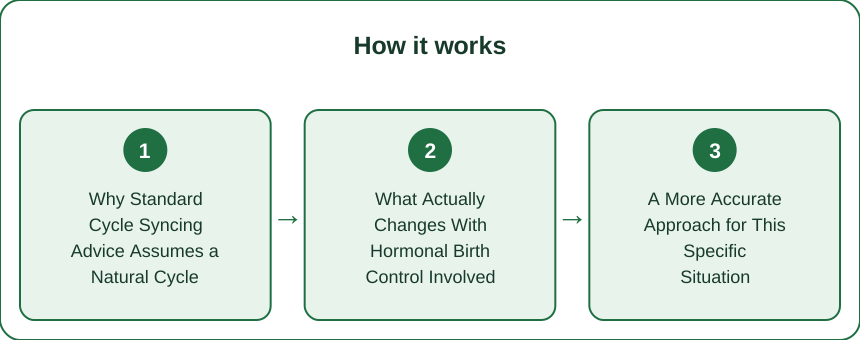
A More Accurate Approach for This Specific Situation
What actually makes sense: the track-your-own-actual-symptom-pattern-rather-than-assuming-the-standard-four-phase-model-applies (the building a personal record of energy, mood and workout capacity across your own actual cycle or pill pack timeline, rather than assuming the standard natural-cycle four-phase framework transfers directly, per the tracking-your-cycle-without-obsessing-guide logic — the your-own-tracked-pattern-is-more-reliable-than-assuming-the-standard-model-applies-to-your-specific-situation), the the-note-your-specific-birth-control-method-since-the-relevant-pattern-differs-by-method (the identifying which specific type of hormonal or non-hormonal method is being used as a starting point, since the relevant considerations genuinely differ by method rather than being one uniform ‘birth control’ category — the your-specific-method-matters-for-what-pattern-if-any-to-actually-expect), the the-pay-attention-to-the-pill-free-or-placebo-week-specifically-if-on-a-combined-method (the withdrawal-bleed week on combined methods being a reasonable specific window to track for any symptom pattern, since it’s the one point in the cycle with the most hormonal change on that particular method — the the-placebo-week-is-the-most-relevant-specific-window-to-track-on-combined-methods), the the-dont-assume-fatigue-or-low-motivation-is-necessarily-cyclical-just-because-cycle-syncing-content-suggests-it-is (the considering non-cyclical explanations — sleep, stress, training load — with real openness, rather than automatically attributing every energy dip to a cyclical hormonal pattern that may not be the actual mechanism at play on your specific method — the stay-open-to-non-cyclical-explanations-rather-than-defaulting-to-a-cyclical-one-that-may-not-apply), the the-discuss-with-a-provider-if-genuinely-curious-about-your-specific-methods-hormonal-pattern (the a provider being able to explain the specific hormonal profile of your particular birth control method more precisely than general cycle syncing content, which wasn’t written with any specific method in mind — the a-provider-can-give-you-the-actual-specific-picture-for-your-method-general-content-cant), and the frame (the more accurate approach as tracking your own actual pattern rather than assuming the standard model applies, identifying your specific method as the real starting point, paying particular attention to the placebo week on combined methods, staying open to non-cyclical explanations for fatigue, and talking to a provider for method-specific detail — genuinely tailored rather than a blanket application of natural-cycle advice to a different hormonal situation. This is general information, not medical advice.)
Standard cycle syncing advice is built around the natural rise and fall of estrogen and progesterone across four distinct phases, and most hormonal birth control methods work specifically by suppressing ovulation and flattening those natural hormonal fluctuations, which means the underlying premise cycle syncing depends on doesn’t fully hold for many birth control users — though different methods, from combined pills to hormonal IUDs to progestin-only options, vary considerably in how much they actually flatten that natural pattern. Practically, the withdrawal bleed on combined methods isn’t the same physiological event as a natural period, personal symptom tracking can still have real value even when the standard explanation for it doesn’t fully apply, and some energy or mood fluctuation may be driven by entirely non-cyclical factors like sleep and stress rather than hormones at all. A more accurate approach means tracking your own actual symptom pattern rather than assuming the standard four-phase model transfers directly, identifying your specific birth control method as the real starting point since the relevant considerations differ by method, paying particular attention to the placebo or pill-free week specifically on combined methods, staying genuinely open to non-cyclical explanations for fatigue rather than defaulting to a cyclical one, and asking a provider for the specific hormonal picture of your particular method when genuinely curious. This is general information, not medical advice.
Keep Reading
This article is for general informational purposes only and is not medical advice. Always consult a qualified health professional for guidance specific to you.