Cycle Syncing When Your Cycle Isn't Regular: A More Realistic Approach
Most cycle syncing content assumes a clean, textbook twenty-eight-day cycle with clearly defined phases landing on predictable days — an assumption that leaves out a large number of women whose cycles are naturally irregular, whether from PCOS, perimenopause, stress or simple individual variation. Here is why standard advice assumes a regularity that doesn’t apply to everyone, the adapted approach for irregular cycles, and when tracking symptoms matters more than tracking calendar days.

Why Standard Cycle Syncing Advice Assumes an Atypical Regularity
The mismatch explained: the the-textbook-28-day-cycle-is-a-simplified-teaching-model-not-the-typical-lived-reality (the widely cited twenty-eight-day, evenly-phased cycle functioning more as an educational simplification than an accurate description of most real cycles, which vary meaningfully in length even among people considered ‘regular’ from the cycle-syncing-honest-guide logic — the the-textbook-model-was-always-a-simplification-not-a-universal-norm), the the-conditions-like-pcos-specifically-disrupt-the-predictable-phase-timing-the-model-assumes (the hormonal conditions affecting ovulation timing and cycle length directly undermining the day-count-based phase predictions standard cycle syncing content relies on — the conditions-affecting-ovulation-timing-break-the-day-count-approach-specifically), the the-perimenopause-introduces-cycle-variability-that-day-based-syncing-cant-accommodate (the hormonal fluctuations of perimenopause frequently causing cycle length and predictability to shift in ways a fixed day-based framework can’t track — the perimenopausal-variability-is-a-second-major-population-the-standard-model-doesnt-serve), the the-stress-and-life-circumstances-can-shift-cycle-timing-even-in-otherwise-regular-cycles (the ordinary life stress, travel or illness shifting cycle timing even for people without any underlying condition, meaning day-based predictions can be wrong even for a generally regular cycle — the even-regular-cycles-shift-sometimes-and-the-day-based-model-doesnt-flex), the the-most-cycle-syncing-content-doesn’t-address-what-to-do-when-the-day-count-model-doesn’t-fit (the widely available guidance rarely offering a clear alternative for people whose cycles don’t fit the assumed pattern, leaving a real gap — the the-gap-in-available-guidance-is-real-not-just-a-personal-frustration), and the reframe (the standard model’s assumption of regularity as a real limitation of the popular approach, not a sign that cycle syncing itself is inapplicable to irregular cycles — it just needs a different tracking method)).

The Adapted Approach for Irregular Cycles
What actually works instead: the track-symptoms-directly-rather-than-predicting-phases-from-day-count (the shifting from predicting which phase ‘should’ be happening on a given calendar day to directly observing and responding to actual physical and energy signals as they occur — the direct-symptom-observation-replaces-day-count-prediction-as-the-primary-method), the the-basal-body-temperature-and-other-physical-signs-can-indicate-actual-ovulation-timing (the tracking physical signs like basal body temperature or cervical mucus changes providing a more direct read on where you actually are in a cycle than counting days from an uncertain start point — the physical-signs-can-reveal-actual-timing-that-day-counting-cant), the the-focus-on-energy-and-symptom-patterns-rather-than-a-fixed-four-phase-calendar (the noticing your own recurring patterns of energy, mood and physical symptoms over several cycles, building a personal pattern library independent of a fixed day-based phase structure — the a-personal-pattern-library-replaces-a-generic-fixed-calendar), the the-work-with-a-provider-if-an-underlying-condition-is-suspected (the seeking a specific diagnosis and management plan for conditions like PCOS, since the underlying hormonal picture affects what symptom-tracking will actually reveal — the an-underlying-diagnosis-changes-what-tracking-can-usefully-tell-you), the the-lower-the-pressure-to-fit-any-specific-syncing-framework-perfectly (the treating cycle syncing as a flexible, personalized tool to draw from rather than a rigid protocol requiring a predictable cycle to work at all — the flexibility-in-application-matters-more-than-a-perfect-fit-to-any-single-framework), and the frame (the adapted approach as tracking symptoms directly rather than predicting from day count, using physical signs like basal temperature for more direct timing information, building a personal pattern library over several cycles, working with a provider for any underlying condition, and treating the whole framework flexibly — cycle awareness without needing calendar regularity as a prerequisite).
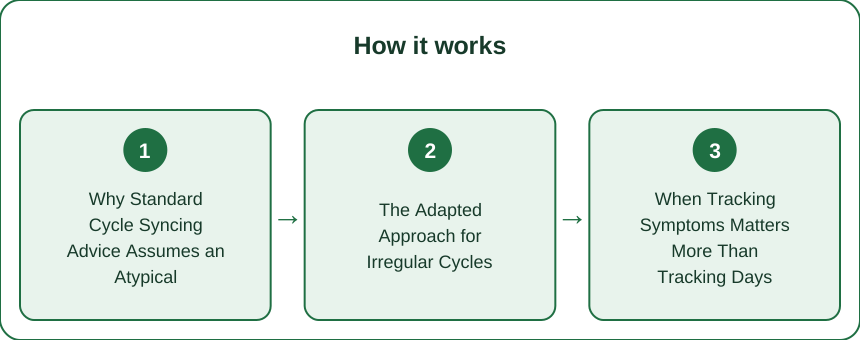
When Tracking Symptoms Matters More Than Tracking Days
The practical distinction: the symptom-tracking-becomes-the-primary-tool-once-cycle-length-varies-significantly-month-to-month (the a cycle length that shifts noticeably from month to month making day-based phase prediction functionally unreliable, at which point symptom tracking becomes the more useful primary method rather than a supplement to it — the significant-month-to-month-variability-is-the-clearest-signal-to-lead-with-symptoms-not-days), the the-day-based-tracking-can-still-add-some-value-even-with-irregularity-as-a-loose-general-reference (the calendar tracking still providing some rough context even without precision, useful as a loose general reference point rather than the primary planning tool from the tracking-your-cycle-without-obsessing-guide logic — the day-tracking-can-remain-a-loose-supplementary-reference-even-when-its-not-precise), the the-symptom-patterns-often-emerge-clearly-even-when-day-counts-dont (the personal energy and mood patterns frequently proving more consistent and recognizable than the day-count timing itself, even in an irregular cycle — the the-pattern-can-be-consistent-even-when-the-calendar-timing-isnt), the the-severe-or-highly-unpredictable-symptoms-warrant-a-provider-conversation-regardless-of-tracking-method (the notably severe or erratic symptoms being worth discussing with a provider directly, since tracking is a self-awareness tool, not a diagnostic replacement — the tracking-informs-a-provider-conversation-it-doesnt-substitute-for-one-when-symptoms-are-significant), the the-the-goal-shifts-from-predicting-the-future-to-understanding-the-present (the reframing the whole practice from forecasting an upcoming phase to simply noticing and responding to what’s actually happening right now — the present-tense-awareness-replaces-future-tense-prediction-as-the-realistic-goal), and the frame (the practical distinction as leaning on symptoms once cycle length varies significantly, keeping day-tracking as a loose secondary reference, trusting that symptom patterns can be consistent even when timing isn’t, involving a provider for severe or erratic symptoms, and shifting the whole goal from prediction to present-moment understanding — cycle awareness reshaped to fit an irregular cycle rather than forcing an irregular cycle to fit a regular framework).
Standard cycle syncing content generally assumes a textbook twenty-eight-day cycle with predictable phase timing, which leaves out a large number of women with PCOS, perimenopause, or simple natural cycle variability where day-count-based phase prediction breaks down. The adapted approach shifts from predicting phases by counting calendar days to directly tracking physical and energy symptoms as they actually occur, using signs like basal body temperature for more direct timing information, and building a personal pattern library over several cycles rather than forcing a fixed four-phase calendar onto an irregular cycle. Symptom tracking becomes the primary tool once cycle length varies significantly month to month, while day-based tracking can still serve as a loose secondary reference — and the whole goal shifts usefully from forecasting an upcoming phase to simply understanding what’s happening in the present, with any severe or highly unpredictable symptoms worth bringing to a provider regardless of tracking method.
Keep Reading
This article is for general informational purposes only and is not medical advice. Always consult a qualified health professional for guidance specific to you.