Cycle Syncing Your Hydration and Electrolytes by Phase
Quick Answer: Two hormones do most of this. Progesterone raises core body temperature by roughly 0.3 to 0.5C in the luteal phase and shifts the thresholds at which you sweat and feel thirsty, so you can lose more fluid while feeling less thirsty. Oestrogen influences fluid retention and sodium handling, which is behind the pre-period bloating that coexists with genuine dehydration. Practically: drink to a schedule rather than to thirst in the luteal phase, add electrolytes for hot or long sessions in that window, and expect a real fluid shift in the first days of your period. This is one of the more defensible pieces of cycle syncing, because the mechanisms are measurable.
You feel puffy and swollen and slightly dehydrated at the same time, which sounds contradictory and is not.
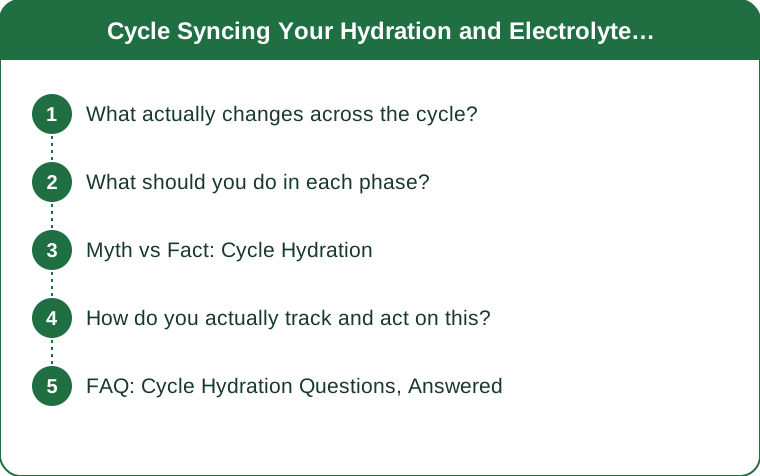
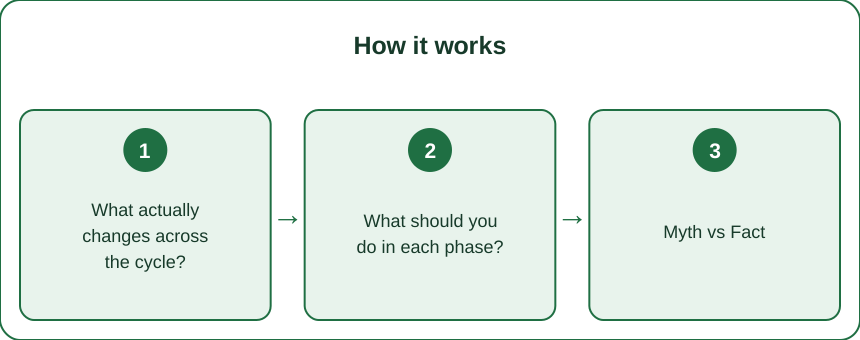
What actually changes across the cycle?
Two hormones, two distinct effects, and the overlap is what produces the confusing symptoms.
Progesterone - the temperature and thirst effect. After ovulation, progesterone rises through the luteal phase. It acts on the hypothalamus and raises core body temperature by roughly 0.3 to 0.5C, which is the basis of basal body temperature tracking.
It also shifts the thresholds for sweating and for thirst upward. In practical terms: in the luteal phase you may start sweating at a slightly higher core temperature, and the sensation of thirst may arrive later relative to actual fluid loss. You can be losing more and noticing less, which is the mechanism that matters for training.
Oestrogen - the fluid retention effect. Oestrogen influences the renin-angiotensin-aldosterone system, which regulates sodium and water retention. Levels peak before ovulation and again in the mid-luteal phase, then fall sharply before menstruation. Fluid retention tends to track those patterns, and the pre-menstrual bloating most people recognise coincides with the late luteal hormonal shift.
Why you can be retaining fluid and dehydrated simultaneously. Retained fluid sits largely in the extracellular space - between cells, in tissues - which is what causes the visible and felt swelling. That is not the same as being well hydrated at the cellular level or having adequate plasma volume for exercise. So the bloated feeling actively discourages drinking at exactly the point when fluid needs are slightly higher.
Plasma volume shifts too, modestly, which affects how blood carries heat to the skin and therefore how well you cool during exercise.
The honest caveat: most of these effects are real but modest. They are not large enough to justify rebuilding your training around, and individual variation is substantial. What they justify is a small adjustment to hydration habits during a specific window - which is a much more useful conclusion than the sweeping versions of cycle syncing.
What should you do in each phase?
Menstrual phase (roughly days 1 to 5).
Hormones are at their lowest, and the fluid retention of the late luteal phase resolves - which is why many people lose a kilogram or two of scale weight in the first days of a period. That is fluid, not fat, and it returns.
- Iron is the more relevant nutrient here than water. Heavy periods are a leading cause of low iron in menstruating people, and low iron produces exactly the fatigue and poor training tolerance people attribute to the period itself. Worth testing rather than guessing if you are persistently tired.
- Hydration needs are close to baseline. Drink normally.
- Some people experience diarrhoea in the first days, driven by prostaglandins, which adds genuine fluid and electrolyte loss. If that is you, this is a real electrolyte window.
Follicular phase (roughly days 6 to 13).
Oestrogen rising, progesterone low, core temperature at its lowest point of the cycle.
- Thermoregulation is at its most efficient. You sweat sooner and cool better, which is why hard sessions and hot conditions are usually most tolerable here.
- Standard hydration. This is the phase requiring the least thought.
Ovulation (roughly day 14).
- Oestrogen peaks then drops; a small temperature rise begins.
- No specific hydration adjustment needed.
Luteal phase (roughly days 15 to 28) - where the adjustments live.
- Core temperature is elevated for the whole phase. Heat tolerance is measurably reduced, and this is the window where hot-weather training feels disproportionately hard.
- Drink to a schedule, not to thirst, because the thirst signal arrives later. A practical version: a set amount at fixed points in the day rather than waiting to feel like it.
- Add electrolytes for sessions over about an hour, and for any session in heat. Sodium is the one that matters most; it supports plasma volume and helps retain what you drink.
- Pre-cool for hot sessions - a cold drink beforehand, training earlier in the day, or a cool shower before going out.
- Expect the bloating and drink anyway. Restricting fluid because you feel puffy is the wrong response and tends to make retention worse rather than better.
Late luteal, the few days before bleeding, is where symptoms cluster - bloating, breast tenderness, fatigue, cravings, and heat intolerance together. It is a reasonable window to lower the ambition of hard sessions in heat, and it is a very poor window to judge your fitness by.

Myth vs Fact: Cycle Hydration
Myth: Bloating means you are drinking too much water. Fact: The opposite is closer to true. Pre-menstrual bloating is hormonally driven fluid retention, and reducing intake tends to prompt the body to hold on to more. Adequate fluid, moderate sodium, and time are what resolve it.
Myth: You should cut salt to reduce period bloating. Fact: Very high sodium intake does worsen retention, but cutting sodium substantially while training and sweating in the luteal phase can leave you short of what you need for plasma volume. Moderate rather than eliminate, and remember that sweat is salty.
Myth: The scale weight gain before your period is fat. Fact: It is fluid, typically one to two kilograms, and it resolves within the first days of bleeding. Weighing daily through this window is a reliable way to feel bad about a number that means nothing.
Myth: Cycle syncing means completely different training in each phase. Fact: The evidence for large phase-based training prescriptions is genuinely weak and inconsistent. The evidence for specific physiological changes - temperature, thermoregulation, fluid balance - is much better. Adjusting hydration and heat management is well supported; rebuilding your whole programme around phases is not.
Myth: If you are on hormonal contraception, none of this applies. Fact: It applies differently. Combined hormonal contraception provides steadier exogenous hormone levels, so the natural fluctuations are largely suppressed - though the pill-free week produces its own pattern. What you should not do is apply natural-cycle phase advice to a contraceptive cycle, since the underlying hormone profile is different.
Myth: Everyone experiences this the same way. Fact: Variation between individuals is large, and some people notice essentially nothing. Tracking your own symptoms for two or three cycles tells you more than any general framework.
How do you actually track and act on this?
The useful version is small and specific rather than an elaborate system.
Track three things for two or three cycles:
- Cycle day, counting day 1 as the first day of full flow
- How hot you felt in training on a simple 1 to 5 scale
- Whether you finished sessions well hydrated - urine colour first thing the next morning is a crude but genuinely useful proxy
That is enough. More detailed tracking rarely changes decisions and often increases anxiety about a normal process.
Then act on the pattern, not the theory. If your heat tolerance drops noticeably in the week before your period, adjust that week. If it does not, do not.
Practical hydration numbers to work from:
- General daily fluid needs vary with body size, activity, and climate, and the useful indicator is pale straw-coloured urine rather than a fixed number of litres.
- For sessions over an hour, or any session in heat, an electrolyte drink containing sodium is more effective than plain water at maintaining plasma volume and at making you actually retain what you drink.
- Sodium is the priority electrolyte; magnesium and potassium matter but are less acutely relevant to a single session.
- Weigh before and after a hard hot session occasionally. Each kilogram lost is roughly a litre of fluid, and it tells you how much you actually need to replace - which is far more individual than any guideline.
When to look beyond the cycle:
- Severe bloating, pain, or symptoms that stop you functioning are not something to manage with a water bottle. Premenstrual dysphoric disorder, endometriosis, and thyroid conditions all deserve assessment.
- Very heavy bleeding, which is a common and treatable cause of iron deficiency.
- Absent or highly irregular cycles, particularly alongside heavy training or low energy availability - this is a signal about overall energy intake, not a hydration question.
This is general information, not medical advice. Persistent severe premenstrual symptoms, very heavy bleeding, or absent periods should be discussed with a healthcare professional.
FAQ: Cycle Hydration Questions, Answered
How much extra water do I actually need in the luteal phase?
There is no reliable fixed number - the change is modest and individual. The more useful shift is drinking to a schedule rather than to thirst during that window, since the thirst signal is what becomes less reliable.
Do electrolyte drinks help with period bloating?
Not directly. Bloating is hormonally driven fluid retention, and electrolytes address a different problem - plasma volume and sweat losses during exercise. Adequate sodium does help you retain fluid usefully rather than passing it straight through.
Should I train differently in the luteal phase?
The evidence for prescribing phase-specific training is weak. Adjusting for heat is better supported: if it is hot and you are in the second half of your cycle, expect it to feel harder and plan accordingly.
Why do I get so thirsty at night before my period?
Elevated core temperature from progesterone, plus disrupted sleep, plus a shifted thirst threshold. Keeping water by the bed is a reasonable response.
Does caffeine make period bloating worse?
Caffeine is a mild diuretic, though the effect is smaller than commonly believed in habitual consumers. It is unlikely to be a major factor either way.
What if my cycle is irregular?
Phase-based planning becomes impractical, and tracking symptoms rather than dates is the more useful approach. Persistent irregularity is worth discussing with a professional rather than working around.
TL;DR:
- Progesterone raises core temperature 0.3 to 0.5C in the luteal phase and shifts thirst and sweat thresholds - so you lose more and feel it less.
- Oestrogen drives fluid retention, which is why you can feel bloated and be genuinely under-hydrated at the same time.
- In the luteal phase, drink to a schedule rather than to thirst, add sodium-containing electrolytes for long or hot sessions, and pre-cool.
- Pre-period scale weight is fluid, not fat, and it resolves in the first days of bleeding.
- The temperature and fluid effects are well supported; sweeping phase-based training prescriptions are not. Adjust hydration and heat management, not your whole programme.
Track cycle day, heat perception, and morning urine colour for two cycles. That is enough to know whether any of this applies to you.
Keep Reading
This article is for general informational purposes only and is not medical advice. Always consult a qualified health professional for guidance specific to you.