Why Cycle Syncing Advice Often Doesn't Apply the Same Way on Hormonal Birth Control
Most cycle-syncing content assumes a natural hormonal cycle with the normal rise and fall of estrogen and progesterone across four distinct phases, and applying that same guidance directly to someone on hormonal birth control skips over a fairly significant mismatch. Here’s the specific hormonal difference that causes the mismatch, and what actually applies instead.

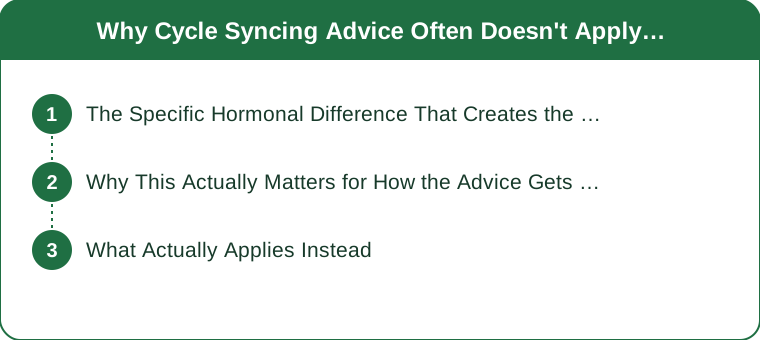
The Specific Hormonal Difference That Creates the Mismatch
The real gap: the the-most-hormonal-birth-control-suppresses-the-natural-fluctuation-that-cycle-syncing-guidance-is-actually-built-around (the the majority of hormonal birth control methods working specifically by suppressing the natural rise and fall of estrogen and progesterone that defines the four traditional cycle phases, replacing it with a much flatter hormonal profile across the pack — the suppressing-the-natural-fluctuation-is-the-specific-mechanism-that-breaks-the-premise-cycle-syncing-guidance-relies-on), and the reframe (the standard four-phase cycle-syncing framework assuming a hormonal pattern that simply isn’t present in the same form for most people on hormonal birth control)).

Why This Actually Matters for How the Advice Gets Applied
The consequence: the the-phase-specific-training-or-nutrition-recommendations-lose-their-underlying-rationale-without-the-corresponding-hormonal-shifts (the recommendations built around a specific phase’s hormonal profile — like adjusted training intensity for a luteal-phase progesterone rise — losing their actual physiological basis when that underlying hormonal shift isn’t happening in the same way — the without-the-underlying-hormonal-shift-the-phase-specific-recommendation-has-no-remaining-physiological-basis), and the frame (the mismatch not being a minor detail but a fairly direct break in the logic connecting the advice to its stated rationale).
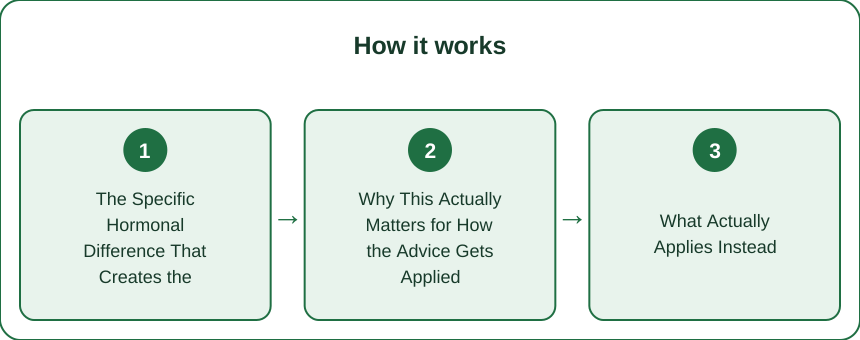
What Actually Applies Instead
The better approach: the the-tracking-the-specific-withdrawal-bleed-and-placebo-week-pattern-of-the-particular-method-being-used-is-more-relevant-than-generic-four-phase-guidance (the paying attention to the specific pattern of the particular birth control method in use — including any placebo week or withdrawal bleed timing — being a more relevant framework than generic four-phase cycle-syncing content built for a natural cycle — the the-specific-methods-own-pattern-not-a-generic-four-phase-framework-is-the-relevant-reference-point), and the frame (the more useful approach being attention to the actual pattern of the specific birth control method in use, rather than importing a framework built for a hormonal pattern that isn’t present in the same form).
Most hormonal birth control methods work specifically by suppressing the natural rise and fall of estrogen and progesterone that defines the traditional four-phase cycle, which means the underlying hormonal premise that cycle-syncing guidance is built around simply isn’t present in the same form. Training or nutrition recommendations tied to a specific phase’s hormonal profile lose their actual physiological rationale when that corresponding hormonal shift isn’t happening, which makes generic four-phase content a mismatch rather than a genuine guide. Paying attention to the specific pattern of the particular birth control method in use — including any placebo week timing — is the more relevant reference point than importing a framework built for a different hormonal pattern altogether.
Keep Reading
This article is for general informational purposes only and is not medical advice. Always consult a qualified health professional for guidance specific to you.